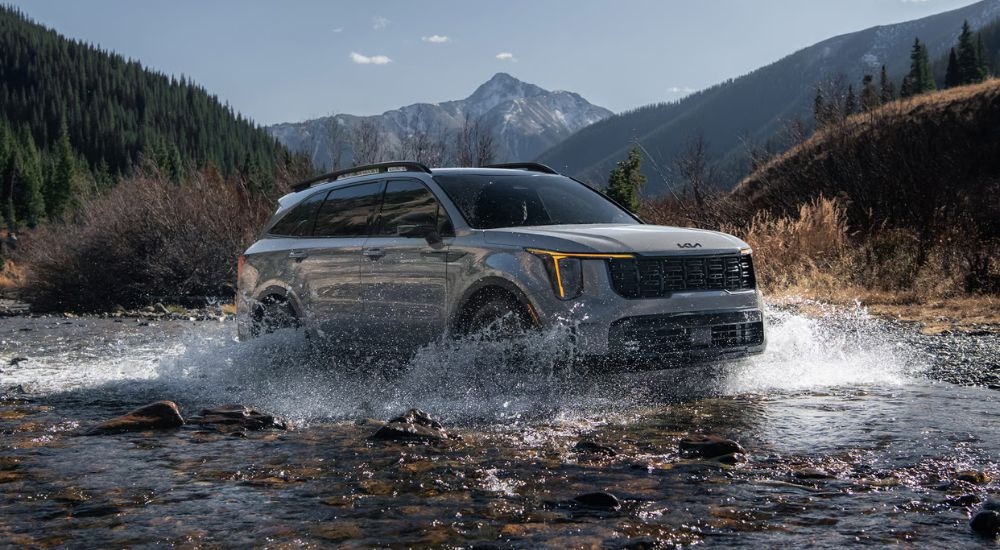
The three-row SUV segment is a competitive one, so in order to stand out in it, manufacturers need to stay ahead of trends. Kia has done an impressive job with that in its Sorento. If you're shopping for a Kia Sorento for sale near Atascocita, and considering different generations, you'll notice the SUV has had an interesting evolution throughout the years.
The original Sorento nearly looks unrelated to today's model. Kia has done a lot with the SUV in its barely quarter-century on the market. So if you're considering a used model, it's important to understand the differences between the generations, as they are substantial. In this blog, we're covering the evolution of the Kia Sorento, kicking things off with the first generation.
First Generation (2003 to 2009)
The very first Kia Sorento was designed to feel and function more like a truck than an SUV. In fact, in one of its earlier press releases for the model, Kia described the first Sorento as having the style of a "premium off-roader" and the strength of a "workhorse." That should give you some idea of the more rugged nature of the original model.
Let's go over some core traits of the first Kia:
- Two rows
- 4X4 available
- A V6 gas engine
- 3,500 lbs towing capacity
- Body-on-frame design
Let's break down some of those details, because they're drastically different from today's Sorento. First off, the two-row design. That's right: the earliest Sorento could only seat five people, across two rows. The Sorento began as a midsize SUV, not a three-row; the third-row option would come later.
As for that body-on-frame design, that is what made the first Sorento feel much more like a truck than an SUV. Put simply, body-on-frame designs start with a rigid steel frame as a base, then add the body bolted on top. Unibody designs build the body and frame as one single piece. Body-on-frame is best for towing and heavy-duty use.
Put simply, the first-generation Sorento focused more on utility and rugged abilities than comfort or efficiency. That would all come later.
Second Generation (2011 to 2015)
By 2011, we started to see the Sorento as something closer to what it is today. Kia skipped the 2010 model year, and during that time, they made big changes. The 2011 model came back with a:
- Unibody design
- Optional 3rd row
- AWD instead of 4X4
- An I-4 engine
- Blind spot detection
Out of the gates, the second-generation Sorento drove more like a car than a truck, thanks to its new unibody design. So handling and comfort improved greatly. Additionally, we saw the introduction of the optional third row, increasing passenger capacity to seven. And the US markets got the addition of an I-4 engine.
Kia's first-ever blind spot detection system debuted with the 2014 Sorento, too, making it easier for drivers to monitor those hard-to-see areas. Commuters who spend a lot of time on congested city streets or freeways saw a major benefit with this feature.
Between a unibody design, more passenger space, and a new, more efficient engine option, the second-generation Sorento was clearly made to appeal more to families and daily drivers than off-road enthusiasts (like the first generation). The switch from 4X4 to AWD signaled a focus on slippery paved roads, rather than off-road trails.
Third Generation (2016 to 2020)
By the start of the third generation, the Sorento was really coming into its own as a passenger and cargo-focused SUV. When Kia brought it back for 2016, it had increased the model's length substantially, opening up more passenger room and more cargo room.
The third row would become standard in 2019, and the Sorento would drop all its two-row design. This is when we truly saw the Sorento move into the family-friendly space. Additionally, Kia gave the model a turbocharged I-4 boasting 290 horsepower, so those craving better acceleration could access it.
Towing ability increased, too, to 5,000 lbs. With a total of three engine options, more interior space, and more towing abilities, the Sorento was evolving into a versatile model by the third generation. It could appeal to carpooling parents, but it could also attract road-tripping friends.
Fourth Generation (2021 to 2026)
The fourth (current) generation Sorento saw many improvements that brought it into the modern age. It received many more driver-assist features, including:
- Forward collision avoidance, which can activate automatic emergency brakes to help reduce the severity of a collision.
- Lane keeping assist, which can provide steering inputs to keep you centered in your lane.
- Lane departure warning, which can detect lane markers and notify you if you're drifting out of your lane.
- Rear occupant alert, which reminds drivers to check the backseat for valuables (or children) before exiting the vehicle.
One of the biggest announcements, however, was the introduction of the plug-in hybrid variant. This made the Sorento a solid option for drivers who put a lot of miles on their vehicles but worried about the gas-guzzling nature of large SUVs.
Drivers now have the option to plug their PHEV Sorento into a charging port, like an electric vehicle. And for those who like a simpler setup, a standard hybrid Sorento is also available.
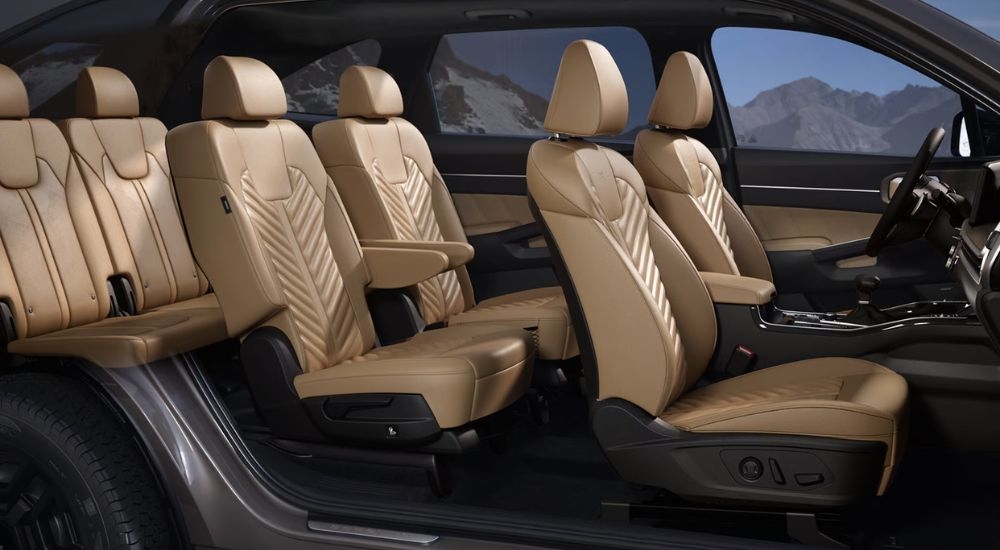
Inside the fourth-generation Sorento, drivers can find premium touches like captain's chairs for a six-passenger setup, a Bose sound system, multiple USB ports, and a panoramic sunroof. It's ready to keep passengers content, whether you're stuck in traffic for your daily drive or enjoying a road trip to a new destination.
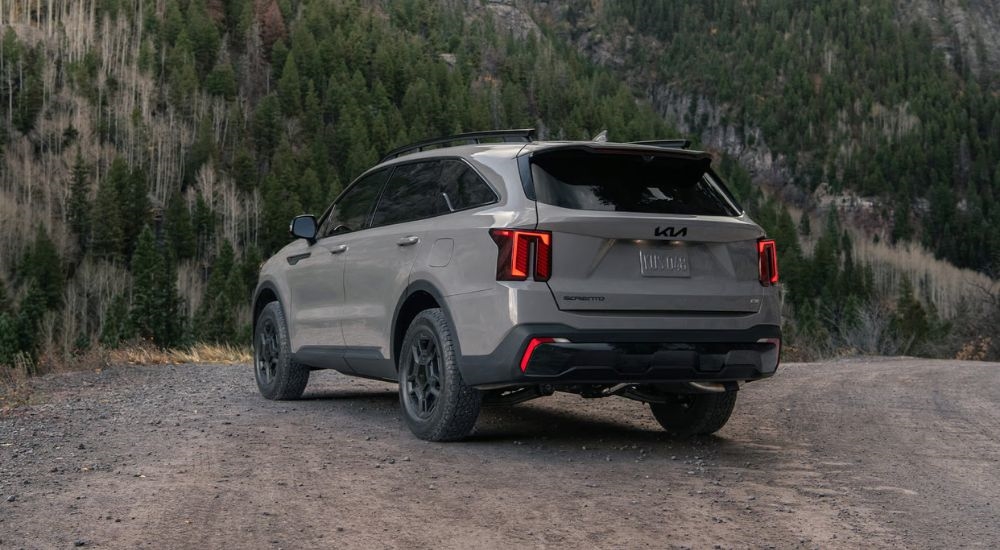
Interestingly, while the Sorento felt like it was leaning towards more of a commuter base for the fourth generation, it did add its X-Line trim, an off-road model. With a higher ground clearance and improved approach/departure angles, along with a more advanced AWD, the X-Line almost feels like a nod to the rugged first-generation Sorento.
With several pure-gas and hybrid powertrains, an off-road trim, and available upscale interior perks, the fourth-generation Sorento might be the most versatile of all. Atascocita drivers from all walks of life can find an engine and trim that's right for their drives in the fourth-generation lineup.
See the Sorento at Parkway Family Kia
The Sorento has come a long way from its early days. What started as a two-row SUV with a body-on-frame design and just one engine option slowly turned into something much more flexible, efficient, and sophisticated. By the second generation, a third row would become optional, and by the third generation, it would become standard.
Several engines were added throughout the years, culminating in a truly diverse powertrain lineup that includes a plug-in hybrid. The Sorento only had 4X4 during its first generation, and its transition to AWD in the second generation nodded to a more daily-driver focus. Driver assist features continued to improve, as did other premium perks.
Atascocita drivers can find many generations of the Sorento here, along with Kia specialists who'd be glad to walk you through them. We are proud to carry tons of model years, trims, and configurations. Drivers know that the Sorento they're after is here, thanks to our variety of inventory. Stop by today to test drive a new or used Sorento!